

One Local Thing: Cadron Settlement Park, Where Arkansas History Runs Deep |
A scenic Conway riverfront park reveals frontier trade, a reconstructed blockhouse and a solemn Trail of Tears history |
Just west of Conway, a quiet stretch of the Arkansas River holds a remarkable and complicated chapter of Central Arkansas history.
Cadron Settlement Park combines river views, wooded trails and a reconstructed blockhouse with stories reaching from Native American history and frontier trade to the forced removal of the Cherokee.
A settlement that might have become a capital
Long before the park existed, Native peoples lived and traveled through this region for centuries.
During the early nineteenth century, a trading settlement grew near the meeting of Cadron Creek and the Arkansas River.
John McElmurry and fellow investors laid out a town in 1818, and the Cadron settlement became a river crossing and trading point.
At one point, the young community was considered in the competition to become Arkansas's territorial capital, a role that ultimately went to Little Rock.
Although the settlement faded as neighboring towns expanded, the site remained tied to important routes across the region.
The blockhouse visitors see today
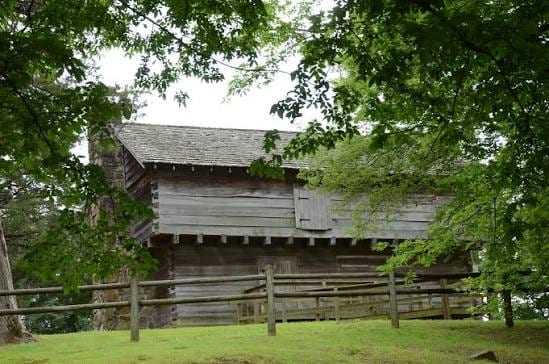
A wooden blockhouse overlooking the river recalls the building used by early traders and travelers.
The present structure is a reconstruction, not an original nineteenth-century building.
A version was built as part of the park's development in the 1970s, destroyed by fire in 1992 and reconstructed again in 1998.
That distinction matters: the building helps interpret history, while the land itself is the historic place.
A solemn connection to the Trail of Tears
Cadron also holds a far more painful history.
In 1834, hundreds of Cherokee people being forcibly removed from their homeland were delayed here when low water in the Arkansas River interrupted their journey.
Cholera spread among the travelers, and many died during the stop.
The National Park Service describes more than 700 Cherokee stranded at the site for 16 days and notes burial sites identified during later historical research.
Interpretive exhibits acknowledge the suffering associated with the Trail of Tears and help visitors understand that this was not simply a frontier trading post.
It is important to approach those exhibits with respect for the people whose lives were lost and the descendants who carry that history.
From mail routes to a public park
The Cadron river landing later served the Butterfield Overland Mail Route in the 1850s and was occupied by Confederate and then Union troops during the Civil War.
Cadron Settlement Park was established in 1979 and today covers approximately 150 acres.
The City of Conway operates the park under a lease from the U.S. Army Corps of Engineers.
What to see when you visit
Visitors can explore the reconstructed blockhouse, walk the park's trails, read interpretive information and take in views of the Arkansas River.
The park also provides picnic areas, restrooms, a boat ramp and two reservable pavilions.
Autumn makes the riverfront and wooded surroundings especially inviting, although trail conditions should be checked before setting out.
Find the park at 6200 Highway 319, Conway, Arkansas.
For current facilities or pavilion arrangements, Conway Parks and Recreation can be reached at 501-450-6186.
Why this place lingers
Cadron Settlement Park is worth discovering not because every chapter of its past is pleasant, but because the setting brings several layers of Arkansas history together in one place.
A visit offers room for both outdoor exploration and reflection on the lives and journeys that shaped the region.
That combination makes Cadron a distinctive choice for this week's One Local Thing. |
0 Comments
Join the conversation
Be the first to comment
Share your thoughts above.